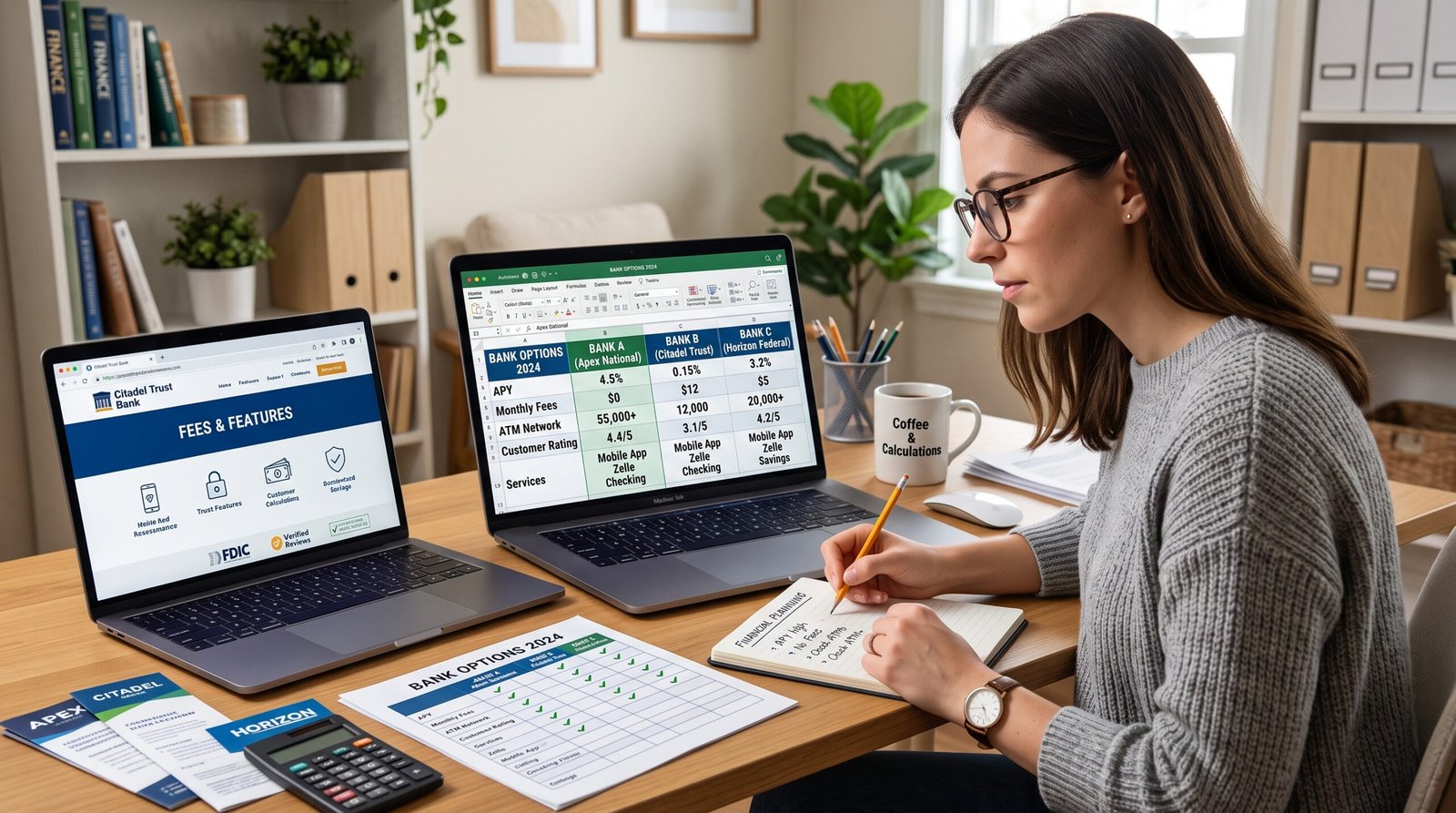
Tips For Choosing The Right Bank
Introduction
Choosing the right bank is one of the most important financial decisions an individual can make. A bank serves as a central institution for managing income, savings, payments, loans, investments, and other financial activities. The services, fees, security measures, and accessibility offered by a bank can significantly impact a person’s financial experience and long-term financial goals.
With many financial institutions offering different products and services, selecting the right bank requires careful evaluation. Some banks focus on digital services, while others emphasize branch access, customer service, or specialized financial products.
This guide explains the most important factors to consider when choosing a bank and provides practical tips to help individuals make informed banking decisions.
Why Choosing the Right Bank Matters
A bank affects many aspects of financial management.
Choosing the right financial institution can provide:
- Better financial organization
- Lower banking costs
- Easier access to funds
- Improved customer service
- Stronger security
- Better savings opportunities
- Access to loans and credit
- Support for long-term financial goals
Choosing the wrong bank may result in unnecessary fees, poor service, and financial inconvenience.
Understand Your Financial Needs
Before selecting a bank, identify your financial requirements.
Consider questions such as:
- Do you need a checking account?
- Do you need a savings account?
- Will you apply for loans?
- Do you require investment services?
- Do you prefer online banking?
- Do you need physical branch access?
- Will you use international banking services?
Understanding your financial needs helps narrow your options.
Compare Different Types of Banks
There are several types of financial institutions.
Traditional Banks
Traditional banks provide:
- Physical branches
- ATM networks
- Personal banking services
- Loan products
- Investment services
Advantages include:
- Face-to-face support
- Extensive services
- Branch accessibility
Online Banks
Online banks operate primarily through digital platforms.
Advantages include:
- Lower fees
- Higher savings rates
- Mobile banking services
- Convenient access
Credit Unions
Credit unions are member-owned financial institutions.
Benefits may include:
- Lower fees
- Competitive interest rates
- Personalized service
Community Banks
Community banks often focus on local customers and businesses.
Comparing institution types helps identify the best fit.
Evaluate Banking Fees
Banking fees can significantly affect finances over time.
Common fees include:
- Monthly maintenance fees
- ATM fees
- Overdraft fees
- Transfer fees
- International transaction fees
- Account closure fees
- Paper statement fees
Questions to Ask
- Does the bank charge monthly fees?
- Can fees be waived?
- Are ATM withdrawals free?
- Are online services included?
Choosing a bank with reasonable fees can reduce banking costs.
Review Interest Rates
Interest rates affect both savings and borrowing.
Savings Account Interest Rates
Compare rates for:
- Savings accounts
- Money market accounts
- Certificates of deposit
Higher rates can increase savings growth.
Loan Interest Rates
Review rates for:
- Personal loans
- Auto loans
- Mortgages
- Credit cards
Lower borrowing costs can save substantial amounts over time.
Examine Online and Mobile Banking Services
Digital banking services have become essential.
Evaluate features such as:
- Mobile applications
- Online account management
- Bill payment services
- Mobile deposits
- Transaction alerts
- Fund transfers
- Budgeting tools
A user-friendly digital platform improves banking convenience.
Consider ATM Availability
ATM access remains important for many customers.
Evaluate:
- Number of ATMs
- ATM locations
- ATM withdrawal fees
- International ATM access
Questions to consider:
- Are ATMs available near your home?
- Are ATMs available near your workplace?
- Does the bank reimburse ATM fees?
Convenient ATM access reduces costs and improves accessibility.
Evaluate Branch Accessibility
Although digital banking continues to grow, physical branches remain important for many customers.
Consider:
- Branch locations
- Business hours
- Weekend availability
- Appointment services
- Drive-through banking
Branch accessibility may be especially important for:
- Businesses
- Elderly customers
- Individuals requiring in-person support
Research Customer Service Quality
Customer service can significantly influence banking experiences.
Evaluate:
- Response times
- Communication channels
- Problem resolution
- Customer satisfaction
- Service availability
Support options may include:
- Phone support
- Email support
- Live chat
- Branch services
- Mobile support
Reliable customer service improves financial management.
Review Account Features
Different banks offer different account features.
Examples include:
Checking Account Features
- Debit cards
- Check writing
- Online bill payment
- Direct deposit
Savings Account Features
- Interest earnings
- Automatic transfers
- Goal tracking
Credit Card Features
- Reward programs
- Cashback benefits
- Fraud protection
Compare account features carefully before making a decision.
Verify Security Measures
Financial security should be a top priority.
Look for security features such as:
- Multi-factor authentication
- Encryption technology
- Fraud monitoring
- Security alerts
- Biometric authentication
- Account activity notifications
Strong security measures help protect financial information.
Confirm Deposit Insurance Protection
Deposit insurance protects customer funds if financial institutions fail.
Examples include:
- Government-backed deposit insurance programs
- National banking insurance systems
Verify:
- Coverage limits
- Eligible account types
- Institution participation
Deposit insurance increases financial security.
Evaluate Loan and Credit Products
Many individuals eventually require credit services.
Review products such as:
- Personal loans
- Home loans
- Vehicle loans
- Business loans
- Credit cards
Compare:
- Interest rates
- Fees
- Repayment terms
- Eligibility requirements
Banks offering competitive lending products may provide long-term benefits.
Consider International Banking Services
International banking features may be important for some customers.
Evaluate:
- Foreign currency services
- International transfers
- Global ATM access
- Travel-related banking services
These services may benefit:
- Travelers
- International students
- Business owners
- Remote workers
Read Customer Reviews
Customer experiences can provide valuable insights.
Review information regarding:
- Customer satisfaction
- Account management
- Banking technology
- Service quality
- Complaint resolution
Researching customer experiences helps identify strengths and weaknesses.
Compare Banking Technology
Technology continues to influence banking services.
Features to compare include:
- Mobile applications
- Digital wallets
- Payment systems
- Investment tools
- Spending analysis
- Financial planning tools
Advanced technology can improve financial management efficiency.
Consider Financial Goals
Your financial goals should influence your banking decisions.
Examples include:
Short-Term Goals
- Budget management
- Emergency savings
- Debt repayment
Long-Term Goals
- Home ownership
- Retirement planning
- Education savings
- Business growth
Choose a bank that supports your future financial plans.
Questions to Ask Before Opening an Account
Before selecting a bank, ask:
- What fees are charged?
- What interest rates are offered?
- Are deposits insured?
- How secure are online services?
- Are there nearby branches?
- How many ATMs are available?
- What customer support options exist?
- What financial products are available?
These questions help identify suitable banking institutions.
Common Mistakes When Choosing a Bank
Many individuals make avoidable mistakes.
Common errors include:
- Choosing based solely on advertisements
- Ignoring banking fees
- Not comparing interest rates
- Overlooking customer service
- Ignoring security features
- Failing to review account terms
- Not considering future financial needs
Avoiding these mistakes leads to better financial decisions.
Sample Bank Comparison Table
| Feature | Bank A | Bank B | Bank C |
|---|---|---|---|
| Monthly Fees | Low | Medium | None |
| Savings Interest | Moderate | High | Moderate |
| ATM Access | Extensive | Limited | Extensive |
| Mobile Banking | Yes | Yes | Yes |
| Branch Access | High | Low | Medium |
| Customer Support | 24/7 | Business Hours | 24/7 |
Comparing banks side by side simplifies decision-making.
Benefits of Choosing the Right Bank
Selecting the appropriate bank can provide:
- Better financial management
- Reduced fees
- Increased savings
- Stronger security
- Improved customer service
- Greater convenience
- Better financial opportunities
A suitable banking relationship can support financial goals for many years.
Conclusion
Choosing the right bank requires careful research and evaluation. Factors such as fees, interest rates, customer service, accessibility, digital services, security, and financial products all play important roles in the decision-making process.
No single bank is ideal for every customer. The best bank depends on personal financial goals, banking habits, and future financial needs. By comparing options carefully and understanding available services, individuals can choose a bank that supports their financial success.
Frequently Asked Questions (FAQ)
What should I consider when choosing a bank?
Consider fees, interest rates, customer service, security, accessibility, and available financial products.
Are online banks better than traditional banks?
Online banks often offer lower fees and higher savings rates, while traditional banks provide physical branch access.
How important are banking fees?
Banking fees can significantly affect long-term financial costs and should be reviewed carefully.
Should I choose a bank with many branches?
If you frequently require in-person services, branch availability may be important.
How can I verify bank security?
Review security features such as encryption, multi-factor authentication, fraud monitoring, and account alerts.
Are deposits protected?
Many banks participate in government-backed deposit insurance programs.
Can I switch banks later?
Yes. Customers can change financial institutions if their banking needs change over time.

Related Posts
Mobile Banking Security Best Practices

Checking Account Vs Savings Account Explained