
How Online Banking Works
Introduction
Online banking has transformed the way people manage their finances. Instead of visiting physical bank branches, customers can perform banking activities using computers, smartphones, tablets, and internet connections. Online banking provides access to financial services at any time and from almost any location.
Banks and financial institutions have invested heavily in digital banking systems to improve customer experience, increase efficiency, and provide secure financial services. Today, millions of people use online banking to check balances, transfer funds, pay bills, apply for loans, and manage investments.
Understanding how online banking works helps individuals use banking services safely and efficiently. This guide explains the fundamentals of online banking, its features, benefits, security measures, and how customers can use online banking services effectively.
What Is Online Banking?
Online banking, also called internet banking or digital banking, is a banking service that allows customers to access and manage their bank accounts through the internet.
Online banking services enable customers to perform financial transactions without visiting a bank branch.
Common online banking services include:
- Account balance inquiries
- Fund transfers
- Bill payments
- Loan applications
- Credit card management
- Investment account access
- Statement downloads
- Transaction history reviews
- Mobile deposits
- Savings account management
Online banking systems operate through secure internet connections and banking software platforms.
The Evolution of Online Banking
Banking services have changed significantly over time.
Traditional Banking Era
Traditional banking required customers to:
- Visit physical branches
- Complete paper forms
- Wait in service lines
- Conduct transactions during business hours
ATM Banking
Automated teller machines introduced:
- Cash withdrawals
- Deposits
- Balance inquiries
- Basic account services
Internet Banking
The growth of internet access allowed banks to provide:
- Online account management
- Electronic payments
- Remote banking services
Mobile Banking
Smartphones expanded banking access through:
- Mobile applications
- Digital wallets
- Instant notifications
- Mobile payments
Today, online banking has become a major component of financial services worldwide.
How Online Banking Systems Work
Online banking relies on several technologies working together.
The process typically includes:
Customer Access
Customers access online banking through:
- Bank websites
- Mobile applications
- Internet-connected devices
Authentication Process
Banks verify customer identity using:
- Usernames
- Passwords
- PIN codes
- Biometric authentication
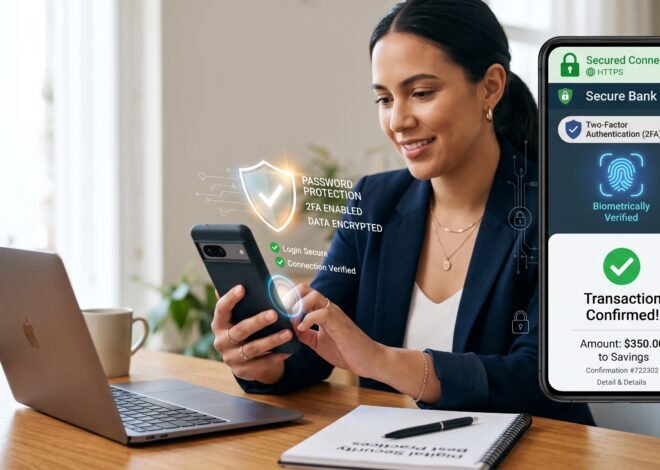
- Multi-factor authentication
Secure Communication
Data transmitted between customers and banks is protected using:
- Encryption technology
- Secure communication protocols
- Authentication systems
Transaction Processing
Bank servers process:
- Deposits
- Withdrawals
- Transfers
- Bill payments
- Account updates
Confirmation
After processing transactions, banks provide:
- Confirmation messages
- Transaction records
- Updated balances
- Notifications
This process often occurs within seconds.
Creating an Online Banking Account
Most banks provide online banking registration services.
The registration process generally includes:
Step 1: Open a Bank Account
Customers first establish:
- Checking accounts
- Savings accounts
- Credit accounts
Step 2: Register for Online Access
Customers provide:
- Account numbers
- Personal identification
- Contact information
Step 3: Create Login Credentials
Users create:
- Usernames
- Passwords
- Security questions
Step 4: Verify Identity
Banks may require:
- Email verification
- SMS verification
- Identity confirmation
Step 5: Activate Online Banking
After verification, customers gain access to digital banking services.
Logging Into Online Banking
Secure login procedures protect customer accounts.
Common login steps include:
- Open the banking website or app.
- Enter the username.
- Enter the password.
- Complete additional security verification.
- Access account information.
Some banks also use:
- Fingerprint authentication
- Facial recognition
- One-time security codes
These methods reduce unauthorized access.
Features of Online Banking
Modern online banking systems provide numerous services.
Account Monitoring
Customers can:
- View account balances
- Review transaction history
- Download account statements
Fund Transfers
Transfers may include:
- Internal account transfers
- Domestic transfers
- International transfers
- Person-to-person payments
Bill Payments
Users can pay:
- Utility bills
- Credit card bills
- Loan payments
- Subscription services
Mobile Check Deposits
Customers can deposit checks using:
- Smartphone cameras
- Mobile banking applications
Loan Services
Banks often provide:
- Loan applications
- Loan management
- Payment schedules
Investment Services
Some institutions allow customers to manage:
- Retirement accounts
- Mutual funds
- Stocks
- Investment portfolios
How Online Money Transfers Work
Money transfers are among the most common online banking activities.
The process includes:
Transfer Request
The customer submits:
- Recipient information
- Account details
- Transfer amount
Verification
Banks verify:
- Available funds
- Account ownership
- Security credentials
Processing
Financial systems process the transaction.
Settlement
Funds are transferred between financial institutions.
Notification
Customers receive confirmation messages.
Processing times vary depending on:
- Bank policies
- Transfer methods
- Geographic location
How Online Bill Payments Work
Online bill payment services simplify expense management.
The process involves:
- Selecting a payee.
- Entering payment information.
- Choosing payment amounts.
- Confirming payment.
- Processing transactions.
Benefits include:
- Reduced paperwork
- Faster payments
- Payment tracking
- Automatic payment scheduling
Online bill payments help improve financial organization.
Mobile Banking and Online Banking
Although closely related, mobile banking and online banking have differences.
| Online Banking | Mobile Banking |
|---|---|
| Website access | Smartphone applications |
| Desktop devices | Mobile devices |
| Browser-based | App-based |
| Full banking services | Portable banking access |
Most banks offer both services simultaneously.
Security Measures Used in Online Banking
Banks invest heavily in security technologies.
Data Encryption
Encryption protects:
- Account information
- Passwords
- Financial transactions
Multi-Factor Authentication
Verification methods may include:
- Passwords
- Security codes
- Biometric scans
Fraud Detection Systems
Banks monitor:
- Suspicious transactions
- Unusual login attempts
- Unauthorized activities
Session Timeouts
Automatic logout features reduce unauthorized access risks.
Security Alerts
Customers receive notifications regarding:
- Account activity
- Login attempts
- Transactions
These systems help protect customer accounts.
Advantages of Online Banking
Online banking offers several benefits.
Convenience
Customers can access accounts:
- Anytime
- Anywhere
Speed
Transactions often occur quickly.
Lower Costs
Digital banking may reduce:
- Service fees
- Travel expenses
Account Monitoring
Customers can track finances regularly.
Automatic Payments
Recurring payments reduce missed bills.
Financial Management Tools
Banks often provide:
- Budgeting tools
- Spending reports
- Savings trackers
These features improve financial management.
Disadvantages of Online Banking
Despite its benefits, online banking has limitations.
Potential disadvantages include:
- Internet dependence
- Technical problems
- Cybersecurity risks
- Limited personal interaction
- Service interruptions
- Fraud risks
Understanding these limitations helps customers prepare accordingly.
Common Online Banking Transactions
Popular online banking activities include:
- Checking balances
- Paying bills
- Sending money
- Receiving deposits
- Managing savings
- Applying for loans
- Reviewing statements
- Setting financial goals
- Updating account information
Most daily banking activities can now be completed digitally.
Tips for Using Online Banking Safely
Customers should follow security practices.
Recommendations include:
- Use strong passwords
- Enable multi-factor authentication
- Avoid public Wi-Fi networks
- Update banking applications
- Monitor account activity regularly
- Log out after each session
- Avoid sharing login information
- Verify banking websites
Safe practices reduce financial risks.
The Future of Online Banking
Online banking continues to evolve.
Emerging technologies include:
- Artificial intelligence
- Biometric security
- Blockchain systems
- Digital currencies
- Automated financial advisors
- Voice banking
- Open banking platforms
These technologies may further transform financial services.
Conclusion
Online banking has changed how individuals manage money by providing convenient access to financial services through internet-connected devices. Through secure authentication systems, encrypted communication, and digital financial platforms, customers can perform a wide range of banking activities without visiting physical branches.
Understanding how online banking works helps individuals use financial services more effectively while maintaining account security. As technology continues to advance, online banking will remain an important part of modern financial management.
Frequently Asked Questions (FAQ)
What is online banking?
Online banking is a digital banking service that allows customers to manage financial accounts through the internet.
Is online banking safe?
Yes. Most banks use encryption, multi-factor authentication, and fraud monitoring systems to protect customers.
Can I transfer money through online banking?
Yes. Online banking allows transfers between accounts, individuals, and financial institutions.
What devices can be used for online banking?
Customers can use computers, smartphones, tablets, and other internet-connected devices.
Do I need to visit a bank branch to use online banking?
Most banks allow customers to register for online banking with minimal branch visits.
What happens if I forget my online banking password?
Banks provide password recovery options through identity verification procedures.
Is mobile banking the same as online banking?
Mobile banking is a form of online banking that operates through smartphone applications.

Related Posts
Mobile Banking Security Best Practices

Tips For Choosing The Right Bank