Checking Account Vs Savings Account Explained
Introduction
Bank accounts play an important role in personal financial management. Among the most common types of bank accounts are checking accounts and savings accounts. While both account types allow individuals to store money securely, they serve different purposes and offer different features.
Many people open both checking and savings accounts because each account supports specific financial needs. Understanding the differences between checking accounts and savings accounts helps individuals make informed financial decisions, manage daily expenses, and build long-term financial security.
This guide explains checking accounts and savings accounts, their features, benefits, disadvantages, and how to choose the right account for your financial goals.
What Is a Checking Account?
A checking account is a bank account designed primarily for everyday financial transactions.
Checking accounts provide easy access to money for activities such as:
- Paying bills
- Making purchases
- Receiving income
- Transferring funds
- Withdrawing cash
- Managing daily expenses
Checking accounts generally allow unlimited transactions and are intended for regular financial activity.
Main Features of a Checking Account
Checking accounts often include several features.
Debit Card Access
Most checking accounts provide:
- Debit cards
- ATM access
- Point-of-sale transactions
Check Writing
Many checking accounts allow customers to:
- Write paper checks
- Make direct payments
Online Banking
Customers can:
- Check balances
- Transfer money
- Pay bills
- Review transactions
Direct Deposits
Employers often deposit salaries directly into checking accounts.
Automatic Payments
Checking accounts support:
- Utility payments
- Loan payments
- Subscription services
These features make checking accounts suitable for everyday banking.
Advantages of a Checking Account
Checking accounts offer several benefits.
Easy Access to Funds
Customers can access money through:
- Debit cards
- ATMs
- Online banking
- Bank branches
Unlimited Transactions
Most checking accounts support frequent transactions.
Bill Payment Convenience
Customers can automate:
- Rent payments
- Utility bills
- Loan installments
Income Deposits
Checking accounts simplify salary and payment deposits.
Financial Tracking
Bank statements help monitor spending patterns.
These advantages make checking accounts practical for daily financial activities.
Disadvantages of a Checking Account
Checking accounts may also have limitations.
Common disadvantages include:
- Low interest earnings
- Monthly service fees
- Overdraft fees
- Minimum balance requirements
- Transaction fees
Because checking accounts prioritize accessibility, they generally offer limited growth opportunities.
What Is a Savings Account?
A savings account is a bank account designed primarily for storing money and building savings over time.
Savings accounts help individuals:
- Save money
- Build emergency funds
- Achieve financial goals
- Earn interest income
Unlike checking accounts, savings accounts encourage long-term saving rather than frequent spending.
Main Features of a Savings Account
Savings accounts provide several important features.
Interest Earnings
Banks pay interest on deposited funds.
Secure Storage
Savings accounts provide protection for money.
Online Banking Access
Customers can:
- View balances
- Transfer funds
- Monitor savings progress
Goal-Based Saving
Savings accounts support goals such as:
- Emergency funds
- Education expenses
- Home purchases
- Retirement savings
Automatic Transfers
Customers can automate monthly savings contributions.
These features help encourage financial discipline.
Advantages of a Savings Account
Savings accounts provide several benefits.
Interest Income
Deposited funds earn interest over time.
Financial Security
Savings accounts help prepare for emergencies.
Reduced Spending
Limited access encourages saving behavior.
Goal Achievement
Savings accounts support long-term financial objectives.
Low Risk
Savings accounts generally provide stable and secure storage.
These benefits make savings accounts important financial tools.
Disadvantages of a Savings Account
Savings accounts also have limitations.
Potential disadvantages include:
- Limited transactions
- Lower returns than investments
- Withdrawal restrictions
- Inflation risk
- Limited access to funds
Savings accounts prioritize security over investment growth.
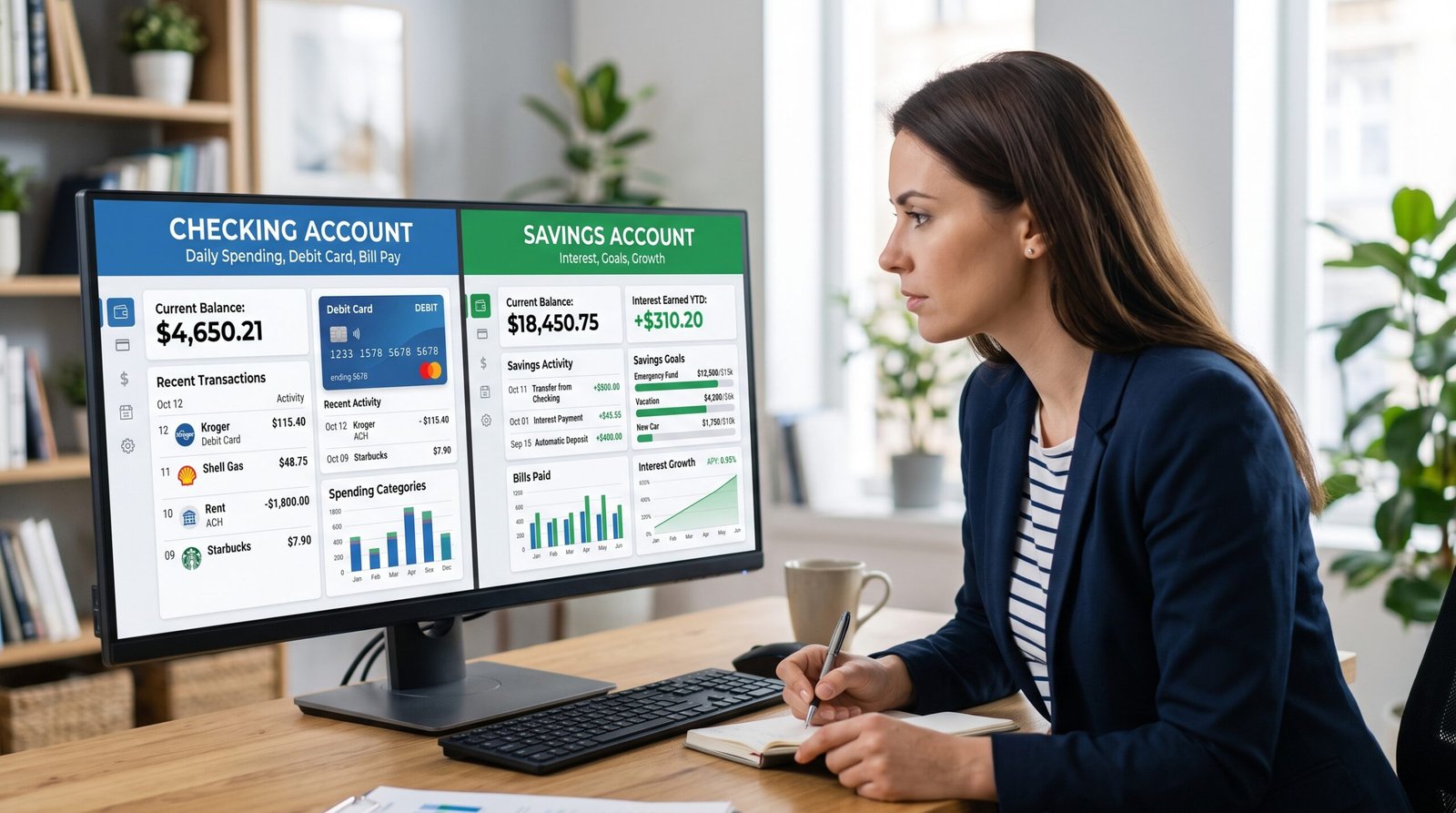
Key Differences Between Checking and Savings Accounts
The primary differences involve purpose, accessibility, and financial goals.
| Feature | Checking Account | Savings Account |
|---|---|---|
| Primary Purpose | Daily spending | Saving money |
| Interest Earnings | Usually low or none | Typically available |
| Transactions | Frequent | Limited |
| Debit Card Access | Yes | Sometimes |
| Check Writing | Yes | Rarely |
| Spending Access | High | Limited |
| Savings Goals | No | Yes |
| Emergency Funds | Less suitable | More suitable |
Understanding these differences helps determine when each account should be used.
When Should You Use a Checking Account?
Checking accounts are best used for regular financial activities.
Examples include:
- Paying bills
- Receiving salaries
- Shopping
- ATM withdrawals
- Monthly expenses
- Online purchases
- Subscription payments
Checking accounts function as financial transaction centers.
When Should You Use a Savings Account?
Savings accounts are best used for financial planning and saving goals.
Examples include:
- Emergency funds
- Vacation savings
- Education expenses
- Home down payments
- Business goals
- Future purchases
Savings accounts support long-term financial security.
Interest Rates and Earnings
One major difference between checking and savings accounts is interest income.
Checking Accounts
Many checking accounts offer:
- No interest
- Low interest rates
Example:
- Balance: $5,000
- Interest: 0.10%
Savings Accounts
Savings accounts often provide:
- Higher interest rates
- Compound interest opportunities
Example:
- Balance: $5,000
- Interest: 3.50%
Interest earnings can increase savings over time.
Accessibility Comparison
Accessibility differs significantly between account types.
Checking Account Access
Customers can access funds through:
- Debit cards
- Checks
- ATMs
- Online banking
- Mobile banking
Savings Account Access
Savings account access often includes:
- Online transfers
- Bank withdrawals
- Limited transactions
Reduced accessibility encourages savings behavior.
Fees Associated With Bank Accounts
Both account types may include fees.
Common Checking Account Fees
- Monthly maintenance fees
- Overdraft fees
- ATM fees
- Transaction fees
Common Savings Account Fees
- Monthly maintenance fees
- Excess withdrawal fees
- Account closure fees
Reviewing fee structures helps reduce banking costs.
Security Features
Both checking and savings accounts provide security measures.
Common protections include:
- Password protection
- Multi-factor authentication
- Fraud monitoring
- Deposit insurance
- Transaction alerts
- Encryption technology
Banks invest heavily in account security.
Should You Have Both Accounts?
Many financial experts recommend maintaining both account types.
Benefits include:
Checking Account
Used for:
- Daily expenses
- Bill payments
- Income deposits
Savings Account
Used for:
- Emergency savings
- Financial goals
- Long-term planning
Combining both accounts supports financial organization.
How to Choose the Right Account
When selecting bank accounts, consider:
Accessibility
Determine how frequently you need access to funds.
Interest Rates
Compare interest earnings among financial institutions.
Fees
Review all account-related charges.
Banking Features
Evaluate:
- Mobile banking
- Online services
- ATM access
- Customer support
Financial Goals
Choose accounts that support your personal financial objectives.
Comparing options helps identify the best banking solution.
Common Mistakes to Avoid
Many individuals make mistakes when choosing bank accounts.
Common errors include:
- Ignoring account fees
- Not comparing interest rates
- Using savings accounts for daily spending
- Keeping all money in checking accounts
- Failing to maintain emergency savings
- Overlooking account restrictions
Avoiding these mistakes improves financial management.
Example Financial Structure
A balanced financial setup may include:
| Account Type | Purpose | Balance Goal |
|---|---|---|
| Checking Account | Monthly expenses | One month of expenses |
| Savings Account | Emergency fund | Three to six months of expenses |
| Investment Account | Long-term growth | Variable |
This structure supports both financial flexibility and financial security.
Conclusion
Checking accounts and savings accounts serve different but equally important financial purposes. Checking accounts support daily financial transactions, while savings accounts help individuals build financial reserves and achieve long-term goals.
Understanding the differences between these account types allows individuals to manage money more effectively, reduce financial risk, and improve financial planning. In many cases, using both account types together provides the best approach to personal financial management.
Frequently Asked Questions (FAQ)
What is the main difference between checking and savings accounts?
Checking accounts are designed for daily transactions, while savings accounts are designed for saving money.
Do checking accounts earn interest?
Some checking accounts earn interest, but rates are generally lower than savings accounts.
Can I withdraw money from a savings account?
Yes. However, some banks limit the number of withdrawals.
Should I have both a checking and savings account?
Many financial experts recommend having both account types.
Which account is better for emergency funds?
Savings accounts are generally more suitable for emergency funds.
Are checking accounts safe?
Yes. Banks use security systems and deposit protection programs to secure accounts.
Can I transfer money between checking and savings accounts?
Yes. Most banks allow transfers through online banking and mobile banking services.

Related Posts

Mobile Banking Security Best Practices
Tips For Choosing The Right Bank