
How Loan Interest Rates Are Calculated
Introduction
Interest rates are one of the most important components of any loan agreement. Whether an individual applies for a personal loan, mortgage, auto loan, student loan, or business loan, the interest rate determines the total cost of borrowing money.
Understanding how loan interest rates are calculated helps borrowers make informed financial decisions, compare loan offers, estimate repayment costs, and manage debt effectively. Loan interest calculations involve several factors, including the principal amount, interest rate, repayment period, credit score, and lending policies.
This guide explains how loan interest rates are calculated, the factors that affect interest rates, and the common methods lenders use to determine borrowing costs.
What Is Loan Interest?
Loan interest is the amount charged by a lender for providing money to a borrower. It represents the cost of borrowing and is usually expressed as a percentage of the loan amount.
The borrower agrees to repay:
- The original loan amount (principal)
- The interest charged by the lender
Interest allows lenders to:
- Earn profits
- Cover operating costs
- Manage lending risks
- Compensate for inflation
What Is the Principal Amount?
The principal amount is the original amount borrowed.
For example:
| Loan Type | Principal Amount |
|---|---|
| Personal Loan | $10,000 |
| Auto Loan | $25,000 |
| Mortgage | $250,000 |
Interest calculations are generally based on this principal balance.
What Is an Interest Rate?
An interest rate is the percentage charged annually on borrowed money.
Example:
- Loan amount: $10,000
- Annual interest rate: 10%
The interest rate determines how much additional money the borrower pays over time.
Interest rates may be:
- Fixed
- Variable
Fixed Interest Rates
A fixed interest rate remains unchanged throughout the loan period.
Example:
- Loan amount: $20,000
- Interest rate: 8%
- Loan term: 5 years
Benefits include:
- Predictable payments
- Stable budgeting
- Protection from market changes
Fixed rates provide certainty for borrowers.
Variable Interest Rates
Variable interest rates may change during the loan period.
These rates are often linked to:
- Market interest rates
- Central bank policies
- Financial indexes
Benefits may include:
- Lower initial rates
- Potential savings if rates decrease
Risks include:
- Payment increases
- Greater financial uncertainty
Borrowers should understand these risks before choosing variable-rate loans.
Basic Interest Calculation Formula
Simple interest is calculated using the following formula:
Interest = Principal × Rate × Time
Example:
- Principal: $5,000
- Interest rate: 10%
- Time: 2 years
Calculation:
Interest = $5,000 × 0.10 × 2
Interest = $1,000
Total repayment:
$5,000 + $1,000 = $6,000
Simple interest calculations are commonly used for short-term loans.
Compound Interest Calculation
Many loans use compound interest.
Compound interest means that interest is calculated on:
- The principal amount
- Previously accumulated interest
The compound interest formula is:
A = P(1 + r/n)^(nt)
Where:
- A = Total amount
- P = Principal
- r = Annual interest rate
- n = Number of compounding periods
- t = Time in years
Compound interest increases borrowing costs over time.
Annual Percentage Rate (APR)
Many lenders use the Annual Percentage Rate (APR).
APR includes:
- Interest charges
- Certain loan fees
- Additional borrowing costs
APR provides a broader estimate of loan costs than interest rates alone.
Example:
| Loan | Interest Rate | APR |
|---|---|---|
| Loan A | 7% | 7.8% |
| Loan B | 7% | 8.4% |
Comparing APR helps borrowers evaluate loan offers more accurately.
Factors That Affect Loan Interest Rates
Several factors influence interest rate calculations.
Credit Score
Credit scores are among the most important factors.
Higher credit scores often result in:
- Lower interest rates
- Better loan terms
Lower credit scores may lead to:
- Higher rates
- Additional requirements
Income
Lenders review:
- Income level
- Income stability
- Employment history
Higher income may reduce lending risk.
Debt-to-Income Ratio
The debt-to-income ratio measures existing debt obligations.
The formula is:
Debt-to-Income Ratio = Monthly Debt ÷ Monthly Income × 100
Lower ratios often result in better interest rates.
Loan Amount
Large loan amounts may affect:
- Risk assessments
- Interest calculations
Loan Term
Longer repayment periods often involve:
- Higher total interest costs
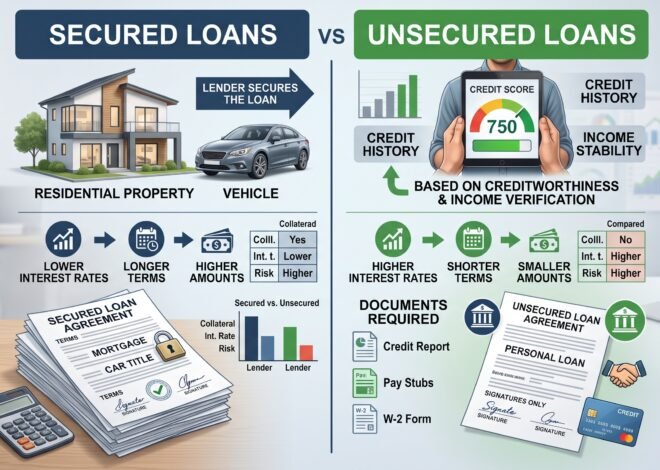
Collateral
Secured loans generally have:
- Lower interest rates
Collateral reduces lender risk.
How Credit Scores Affect Interest Rates
Credit scores directly impact borrowing costs.
Example:
| Credit Score | Possible Interest Rate |
|---|---|
| 750+ | Lower |
| 700–749 | Moderate |
| 650–699 | Higher |
| Below 650 | Highest |
Maintaining good credit can significantly reduce total borrowing costs.
How Loan Terms Affect Interest
Loan duration affects total interest payments.
Example:
Five-Year Loan
- Lower total interest period
- Higher monthly payments
Ten-Year Loan
- Higher total interest period
- Lower monthly payments
Borrowers should balance affordability and total cost.
How Mortgage Interest Is Calculated
Mortgage lenders typically use amortization schedules.
Each payment includes:
- Principal repayment
- Interest payment
During the early years:
- Interest payments are larger
Later in the loan:
- Principal payments increase
This process gradually reduces the outstanding balance.
How Personal Loan Interest Is Calculated
Personal loans commonly use:
- Simple interest
- Fixed-rate calculations
Factors affecting rates include:
- Credit score
- Income
- Loan amount
- Repayment period
Personal loan rates vary among lenders.
How Credit Card Interest Is Calculated
Credit cards generally use daily interest calculations.
The process includes:
- Determining the daily interest rate.
- Calculating average daily balances.
- Applying interest daily.
Because of frequent compounding, credit card borrowing can become expensive.
Amortization Explained
Amortization refers to the gradual repayment of debt through scheduled payments.
Each payment includes:
- Interest expense
- Principal reduction
Example:
| Payment | Interest | Principal |
|---|---|---|
| First Payment | High | Low |
| Final Payment | Low | High |
Amortization schedules help borrowers understand repayment progress.
Why Interest Rates Vary Between Borrowers
Not all borrowers receive identical rates.
Differences may result from:
- Credit history
- Income
- Employment
- Collateral
- Loan amount
- Loan purpose
- Market conditions
Lenders evaluate individual risk profiles.
How Central Banks Influence Interest Rates
Central bank policies affect lending rates.
When central banks increase rates:
- Borrowing costs often increase
When central banks reduce rates:
- Borrowing costs may decrease
Economic conditions strongly influence lending markets.
How to Reduce Loan Interest Costs
Borrowers can reduce costs through several strategies.
Improve Credit Scores
Methods include:
- Paying bills on time
- Reducing debt
- Monitoring credit reports
Compare Multiple Lenders
Shopping for loans helps identify competitive rates.
Choose Shorter Loan Terms
Shorter repayment periods often reduce total interest.
Make Additional Payments
Extra payments reduce principal balances faster.
Use Secured Loans When Appropriate
Collateral may lower interest costs.
These strategies can reduce total borrowing expenses.
Example Loan Calculation
Assume:
- Loan amount: $10,000
- Interest rate: 8%
- Loan term: 3 years
Approximate repayment:
| Item | Amount |
|---|---|
| Principal | $10,000 |
| Interest | $1,300 |
| Total Repayment | $11,300 |
Actual amounts vary based on lender calculations.
Common Borrower Mistakes
Common mistakes include:
- Ignoring APR
- Focusing only on monthly payments
- Borrowing excessive amounts
- Choosing long repayment terms unnecessarily
- Failing to compare lenders
- Overlooking fees
Avoiding these mistakes reduces financial costs.
Conclusion
Loan interest rates determine the true cost of borrowing money. Lenders calculate interest using various factors, including credit scores, income, debt levels, loan terms, and market conditions. Understanding how interest rates work helps borrowers compare loan options, estimate repayment costs, and make informed financial decisions.
By improving credit profiles, comparing lenders, and selecting appropriate loan terms, borrowers can reduce interest expenses and manage debt more effectively.
Frequently Asked Questions (FAQ)
What is loan interest?
Loan interest is the cost charged by lenders for borrowing money.
What is the difference between fixed and variable interest rates?
Fixed rates remain constant, while variable rates may change over time.
What is APR?
APR represents the annual cost of borrowing, including interest and certain fees.
How does credit score affect interest rates?
Higher credit scores often result in lower interest rates.
What is compound interest?
Compound interest is calculated on both the principal and accumulated interest.
Can I reduce my loan interest costs?
Yes. Improving credit scores, comparing lenders, and making additional payments can reduce borrowing costs.
Why do different borrowers receive different interest rates?
Lenders assess each borrower’s financial risk individually, resulting in different rates.

Related Posts

Tips For Paying Off Loans Faster
Secured Vs Unsecured Loans Explained